
Diego Maradona vs Luis Enrique: Stats Compared
Forward / Playmaker, Argentina (born 1960, retired 1997) · Attacking Midfielder, Spain (born 1970, retired 2004)
Diego Maradona against Luis Enrique is the kind of comparison that fuels pub arguments for hours. Their jobs on the pitch were not the same, yet both redefined what their role could be. Diego Maradona finishes with 293 career goals from 582 games — a 0.50 strike rate — against Luis Enrique's 158 from 556 at 0.28 per match. Because assists were not systematically tracked for much of their time, that side of the comparison rests on the footage that survives. In major honours Diego Maradona collected 6 — headlined by 1× FIFA World Cup (1986) — whereas Luis Enrique amassed 8, led by 2× La Liga (1995, 1999). As a forward / playmaker Diego Maradona bent the role to a ruthless template; as a attacking midfielder, Luis Enrique redefined it with silky authority. Their routes to the top were distinct: Diego Maradona built his reputation across Argentinos Juniors, Boca Juniors, Barcelona, Napoli, Sevilla, Newell's Old Boys, peaking around 1986, while Luis Enrique reached his defining level around 1999 after spells with Sporting Gijón, Real Madrid, Barcelona. Each, in his own way, set a standard the other is measured against.
190 words · comparison angle: role
Player profiles
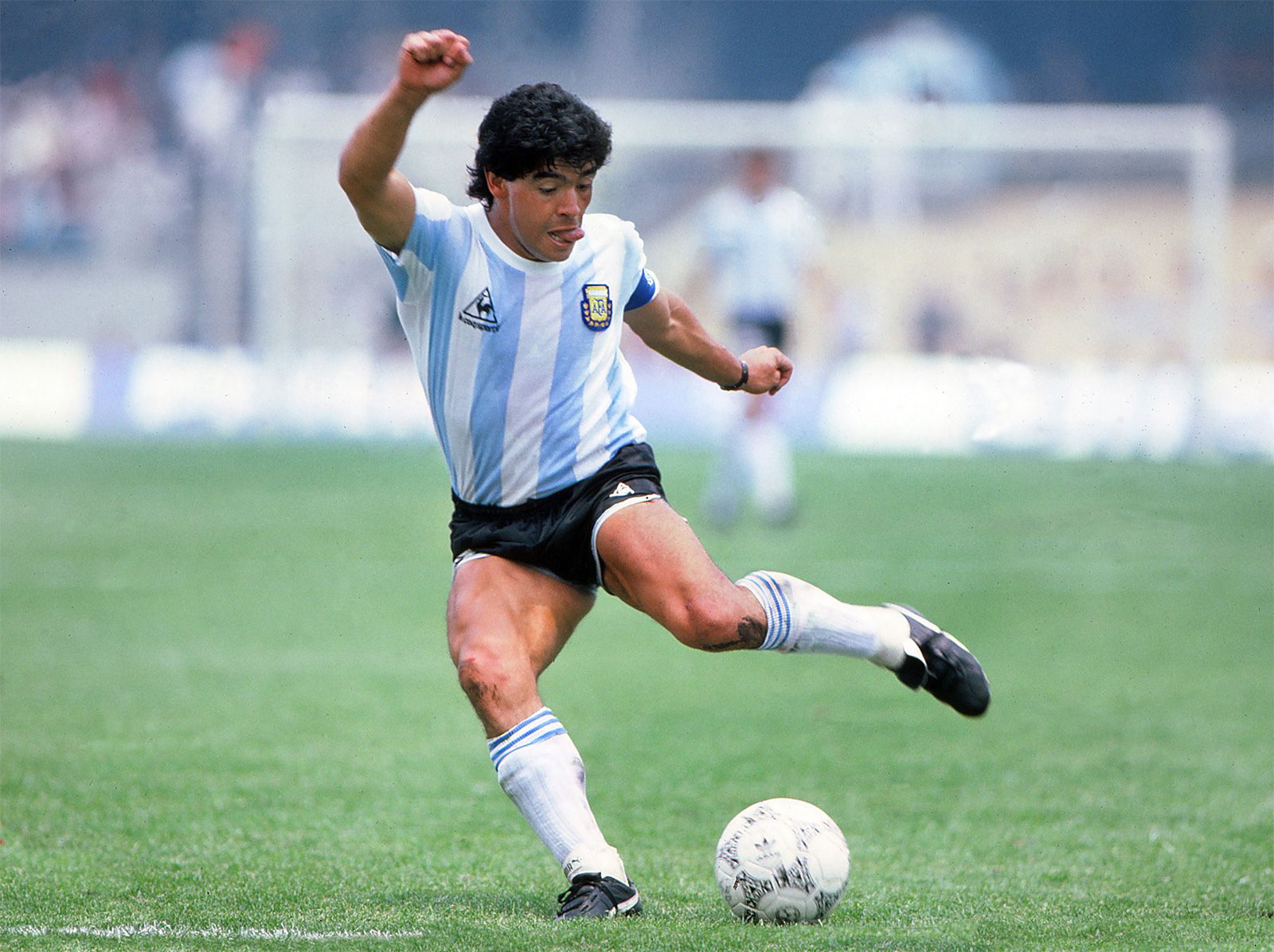
Argentine legend who almost single-handedly led Argentina to the 1986 World Cup and transformed Napoli into Italian and European contenders.
“A low-centre-of-gravity left-footed genius whose dribbling and playmaking carried teams single-handedly.”
Luis Enrique Martínez García is a Spanish football manager and former player who is currently the head coach of Ligue 1 club Paris Saint-Germain. A versatile player with good technique, he was capable of playing in several positions but was usually deployed as a midfielder or forward, and was also noted for his temperament and stamina. Starting in 1991 and ending in 2004, he began his career at Sporting de Gijón and later represented both Real Madrid and Barcelona with both individual and team success, taking part in 558 official games and scoring 144 goals.
“A versatile, hard-running midfielder who arrived late and contributed everywhere.”
Head-to-head stats
Career goals by season
Representative career seasons — goals per season for each player across their documented clubs.
Attribute radar
Attribute ratings are peak-era, 0–100. Different positions naturally skew the profile.
Attribute comparison
Trophy breakdown
- 1× FIFA World Cup (1986)
- 1× UEFA Cup (1989)
- 2× Serie A (1987, 1990)
- 1× Copa Italia (1987)
- 1× Argentine Primera División (1981)
- 2× La Liga (1995, 1999)
Trophy distribution
Career milestones
- 1976 Argentinos Juniors debut ten days before his 16th birthday
- 1981 Joined Boca Juniors and won the Argentine league
- 1982 World-record transfer to Barcelona
- 1984 Signed for Napoli for another world-record fee
- 1987 Led Napoli to their first ever Serie A title
- 1990 Captained Argentina to a second consecutive World Cup final
- 1997 Played his final professional matches at Boca Juniors
- 1991 Established himself at Sporting Gijón
- 1995 Reached his defining peak
- 1999 Delivered a landmark season
- 2004 Retired from professional football
The verdict
Taking goals, assists, silverware and overall profile together, Diego Maradona takes it by a narrow margin.
Diego Maradona edges it (a narrow margin)